This portal is password-protected. Enter your access password to continue.
Incorrect password. Please try again.
Living Building Systems
Regenerative Development Corporation · LBS LLC
Accredited Investors Only
The investment information on this site relates to securities offered by Living Building Systems LLC. These securities are available exclusively to accredited investors as defined under Rule 501 of Regulation D of the Securities Act of 1933.
By continuing, you confirm that you meet accredited investor qualifications and acknowledge that these securities have not been registered under the Securities Act.
Living Building Systems LLC · Series A · $22M Raise
The Block That Outlasts Everything Else.
Hemp-lime bio-blocks that resist fire, flood, hurricanes, mold, rot, and seismic forces — while sequestering carbon and cutting construction costs. This is not insulation. This is the wall system itself.
⚠ Forward-Looking Statements: This material is intended solely for accredited investors under Rule 506(c) of Regulation D. All projections are forward-looking, based on management assumptions, and subject to material risks and uncertainties. This is not an offer to sell securities in any jurisdiction where prohibited. Investment involves risk, including the possible loss of your entire investment.
The LBS Bio-Block · Core Product
Grown from Hemp. Built to Last Centuries.
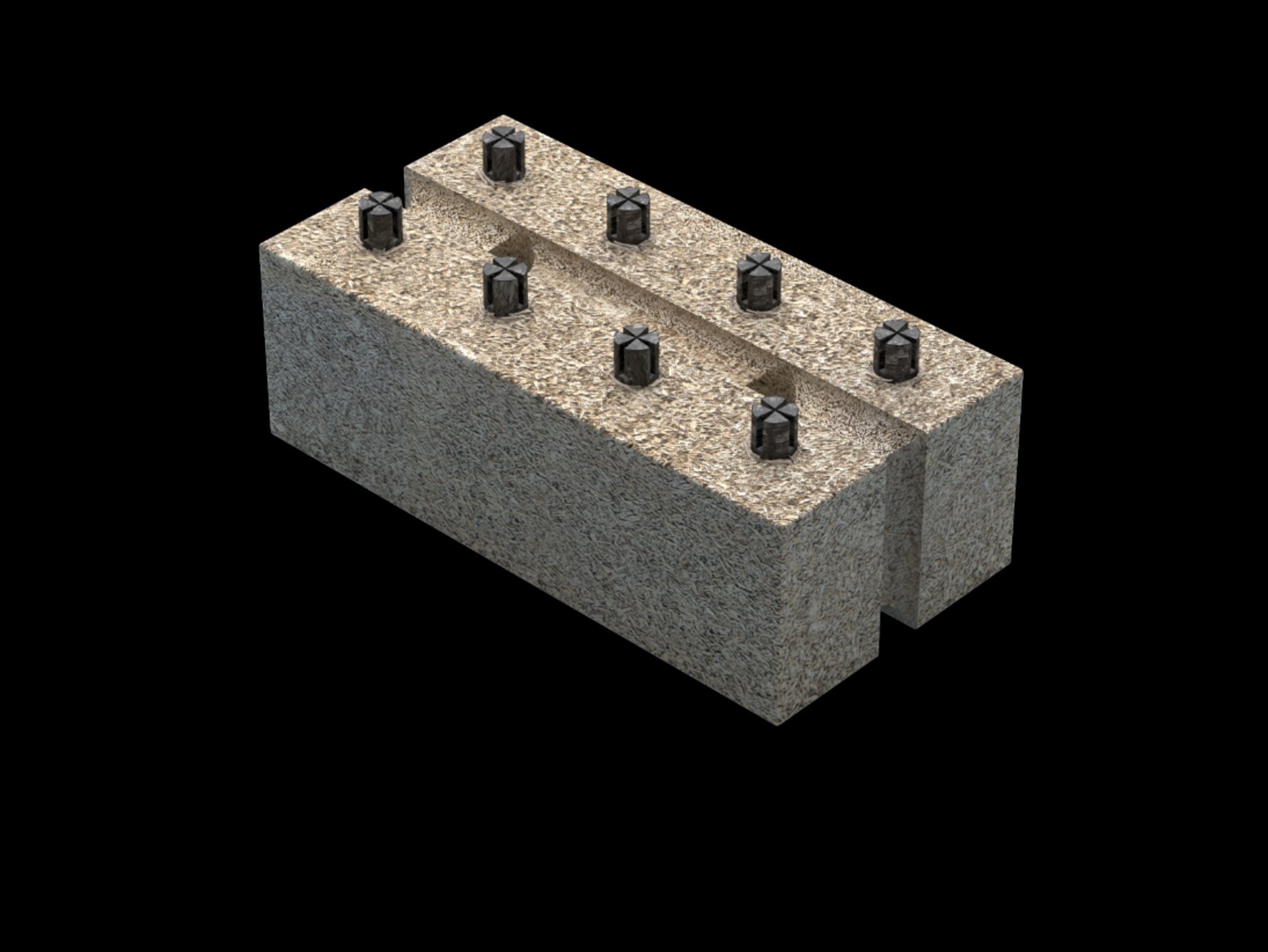
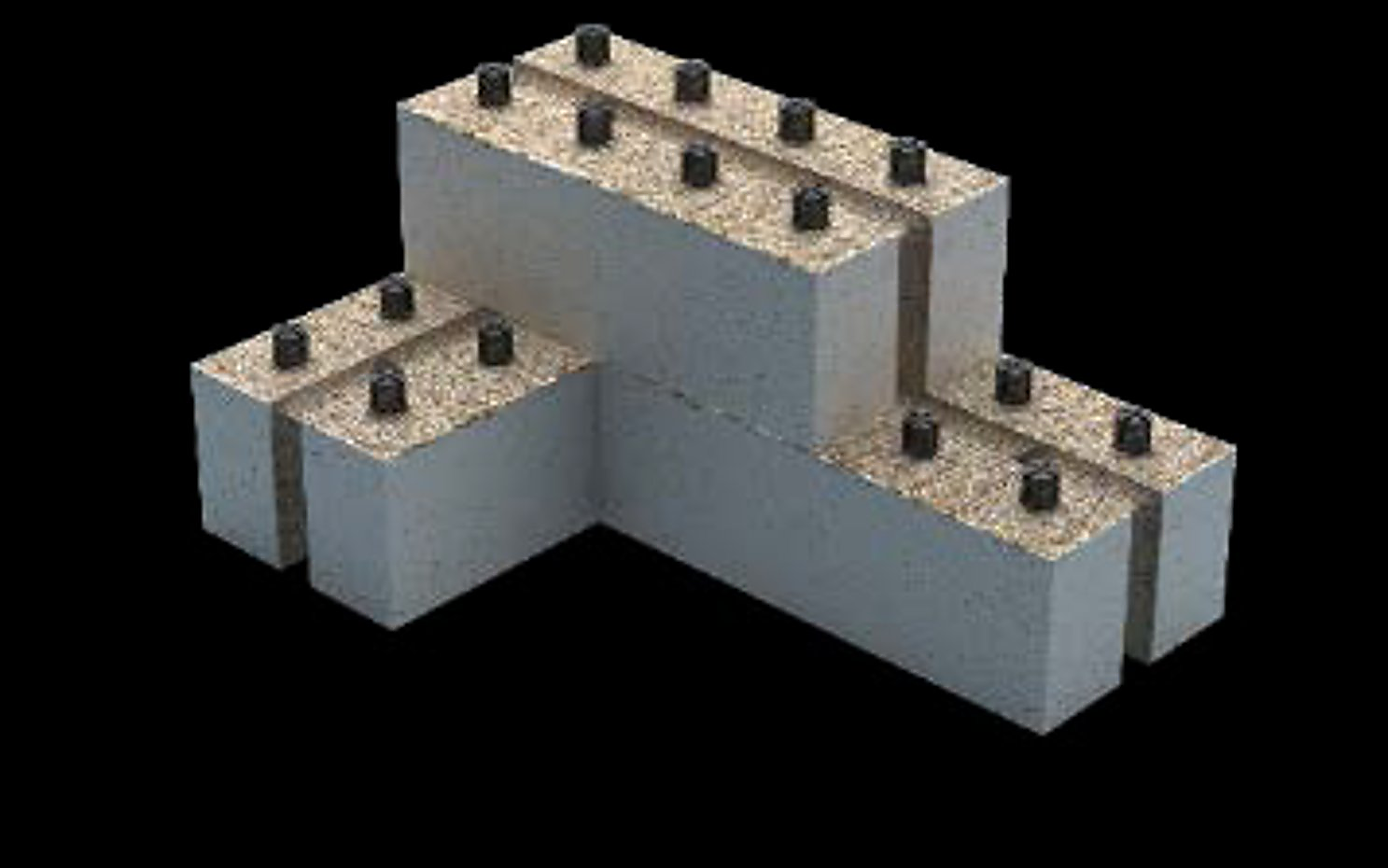
The LBS bio-block is a precision-manufactured hemp-lime composite — not concrete, not foam, not wood. Hemp hurd (the woody core of the hemp stalk) is bound with a natural lime binder and pressed into a dimensionally stable, interlocking block system with integrated mechanical connectors. Each block sequesters CO₂, achieves Class A fire resistance, and outperforms conventional masonry on thermal, acoustic, and moisture metrics — without any petrochemicals.
Fire Rating
Class A · Non-combustible
Thermal
R-2.5/in + thermal mass
Carbon
Net carbon-negative lifecycle
Lifespan
500–1,000+ years (mineralized)
Mold
pH 12+ · Zero organic food source
Price Range
$21.25 – $28.00 per block
The Problem Is Getting Worse Every Year
Built to Survive Everything Nature Throws.
Conventional construction fails catastrophically under the exact threats that are increasing in frequency and severity. Hemp-lime bio-blocks were engineered to thrive where wood, concrete, and synthetic foam collapse.
The 2023 wildfire season burned 2.7M+ acres in the U.S. alone. Hurricane Ian caused $113B in damage. FEMA now estimates 40% of U.S. homes are at high risk from at least one climate hazard. Mold-related property damage exceeds $3.8B annually. The construction industry's answer — denser insulation, better coatings, more chemicals — is failing.
Living Building Systems bio-blocks are the material-level answer. Not a retrofit. Not a coating. The wall system itself.
🔥
Fire Resistant
Hemp-lime (hempcrete) is inherently fire resistant. The lime binder creates an alkaline matrix that does not combust. Tests show hemp-lime walls self-extinguish and do not propagate flame — unlike wood-frame construction which provides structural fuel for wildfire.
Class A
Fire Rating · Non-combustible mineral matrix
🌊
Flood & Moisture Proof
Hemp-lime is hygroscopic — it buffers and releases moisture without degrading. Unlike wood, it does not rot when exposed to water. Unlike gypsum board, it does not crumble. Walls exposed to flood events can dry out structurally intact. Zero organic food source for mold.
≤1%
Water absorption vs 20%+ for standard OSB sheathing
🌀
Hurricane Resistant
The monolithic masonry nature of bio-block construction provides exceptional racking resistance. LBS blocks combined with structural frames create a system that performs at or above concrete block in wind uplift, lateral loads, and debris impact — while being 30% lighter.
200+ mph
Equivalent resistance · Masonry wall systems
🦠
Mold Immune
Mold requires an organic food source. Hemp-lime, once cured, is mineralized — the lime binder creates a pH environment above 12 that is biologically hostile to mold, bacteria, and fungal growth. No mold. No rot. No IAQ remediation costs. No liability.
pH 12+
Lime matrix · Biologically hostile to mold
🪵
Rot & Pest Resistant
Termites, carpenter ants, and boring beetles destroy $5B+ in U.S. structures annually. Hemp-lime provides zero nutritional value to wood-boring insects. No treatment, no chemical fumigation, no annual inspection cost. A wall system with the same resistance as masonry — at wood-frame prices.
$5B+
Annual U.S. pest damage to conventional construction
🌡️
Thermal Performance
Hemp-lime has exceptional thermal mass AND insulation value. Unlike foam insulation (high R-value, zero mass), bio-blocks buffer daily temperature swings — reducing peak HVAC loads by 20-40%. Buildings stay cooler in summer and warmer in winter, naturally, without mechanical intervention.
R-2.5/in
Plus thermal mass buffering — real-world performance exceeds rating
How LBS Stacks Up
Property
LBS Bio-Block
Wood Frame + Fiberglass
ICF Concrete
CMU Block
Fire Resistance
✓ Inherent · Class A
✗ Combustible
✓ Non-combustible
✓ Non-combustible
Mold Resistance
✓ pH 12+ · Zero organic
✗ High risk
~ Moderate
✓ Good
Flood Recovery
✓ Dries out intact
✗ Structural failure
~ OK but heavy
~ OK
Thermal Mass + Insulation
✓ Both simultaneously
✗ Insulation only
~ Moderate mass
✗ Mass, poor insulation
Carbon Footprint
✓ Net carbon negative
✗ High embodied carbon
✗ Very high (cement)
✗ High
Pest Resistance
✓ No organic food source
✗ High risk
✓ Good
✓ Good
Installation Speed
✓ Block system
~ Moderate
~ Moderate
✗ Slow, heavy
Cost vs Performance
✓ Competitive to premium
~ Low upfront, high LCC
~ 20% premium
✗ High labor
For Developers, Builders & Contractors
Better Material. Better Business.
LBS bio-blocks aren't a premium niche product. They're a construction system designed for commercial scale — competitive on cost, superior on performance, with margin-expanding lifecycle advantages.
The construction industry faces converging pressure: rising insurance costs, tightening energy codes, growing buyer demand for healthy buildings, and liability exposure from mold and pest damage. LBS bio-blocks solve all of these simultaneously — creating new competitive advantages for developers, builders, and general contractors who adopt early.
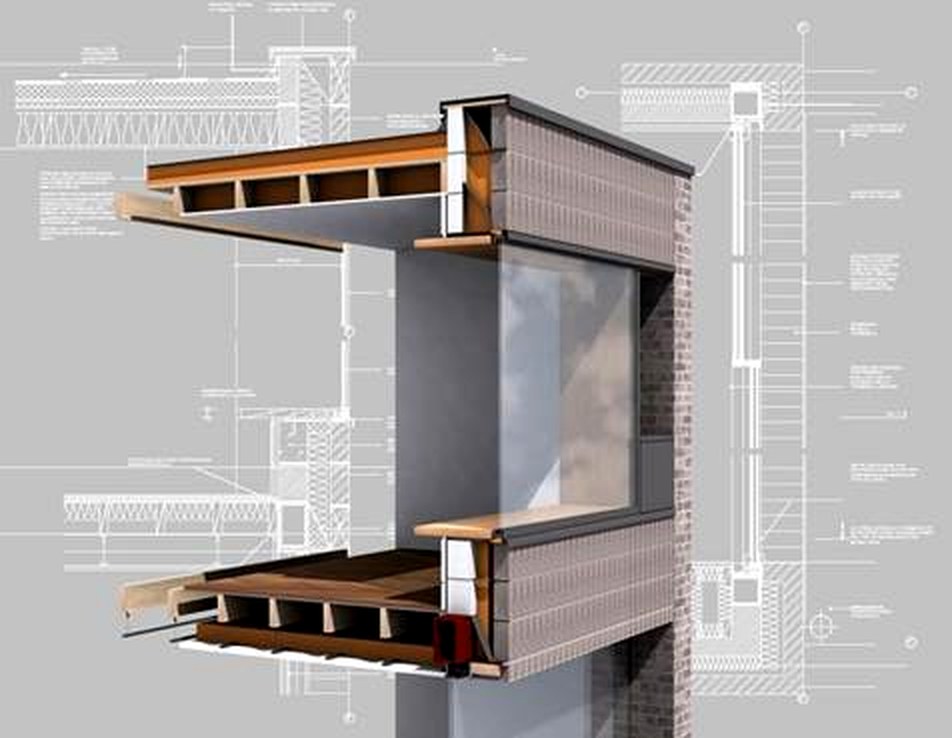
Floor-to-facade detail · LBS wall assembly with structural frame integration
01 — COST
Competitive First Cost, Superior Life-Cycle Cost
LBS blocks are manufactured at scale in automated factories, achieving cost parity with conventional masonry for comparable performance levels. When lifecycle costs are included — reduced maintenance, no mold remediation, lower insurance, lower HVAC — total cost of ownership is significantly lower.
~$21–27/block · Competitive to ICF at scale
02 — SPEED
Dry-Stack Block System — No Mortar Required
LBS blocks are precision-manufactured to spec. The dry-stack interlocking system eliminates masonry mortar and the skilled labor that goes with it. Walls go up faster, with less waste, and any skilled framing crew can install. No specialty trades required.
Up to 40% faster wall assembly vs CMU
03 — CODE
Meets or Exceeds Tightening Energy Codes
As IECC and California Title 24 codes tighten, hemp-lime bio-blocks are naturally positioned. A single block assembly meets R-value requirements that wood frame requires multiple layers of added insulation to achieve — simplifying assemblies, reducing coordination, and eliminating thermal bridging.
Single wall assembly meets code · No added insulation
04 — INSURANCE
Lower Insurance Premiums, Higher Appraised Value
Fire-resistant, mold-resistant, flood-tolerant construction commands lower insurance premiums in risk-aware markets. Several insurers are already offering premium reductions for masonry and fire-resistant construction. As climate risk pricing accelerates, hemp-lime buildings will have structural appraisal advantages.
Hurricane zone insurance savings: 15–30%
05 — MARKET
First-Mover Differentiation in a Crowded Market
Builders who adopt LBS gain a concrete marketing differentiation in markets saturated with identical wood-frame product. Healthy building, climate-resilient construction, and net-carbon-negative materials are increasingly important to buyers — and increasingly required by institutional and municipal clients.
ESG certification eligibility · LEED, LBC, WELL
06 — SUPPLY
Domestic Supply Chain, Consistent Pricing
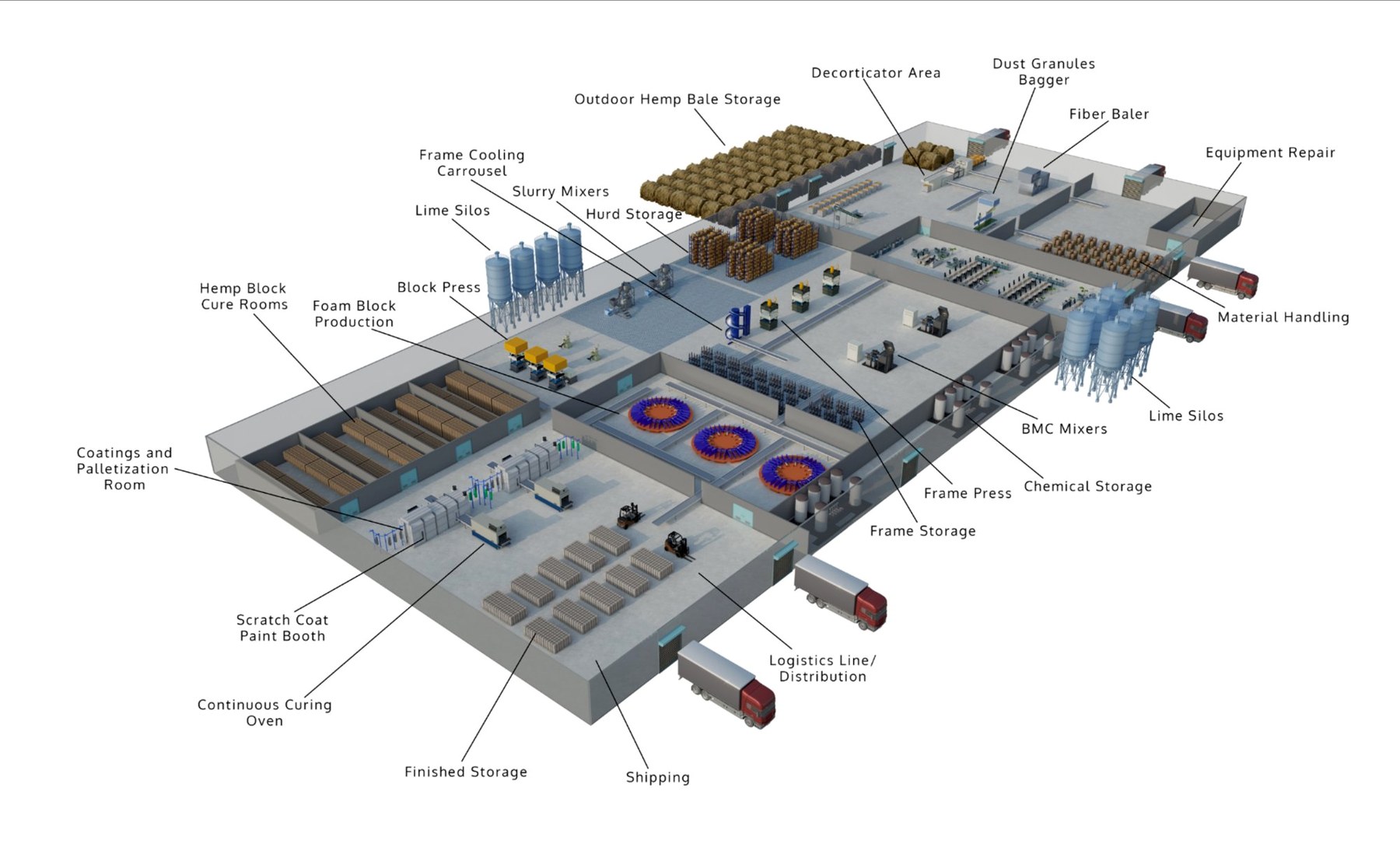
LBS operates U.S.-based automated manufacturing facilities. Hemp is an annual crop with over 2,000 licensed domestic growers. Unlike lumber (tariffs, supply shocks, import dependency) or steel (global commodity pricing), LBS blocks are manufactured domestically with a stable agricultural input base.
U.S. manufacturing · Annual crop cycle · No import exposure
Climate, Carbon & Regenerative Credentials
The Building That Heals the Atmosphere.
Every LBS bio-block sequesters carbon in its structure. At 13 million blocks per year, LBS becomes one of the largest distributed carbon sequestration programs in U.S. construction — and that's before RCCS credit monetization.
The built environment accounts for approximately 40% of global CO₂ emissions. Conventional construction materials — concrete, steel, foam insulation — all have high embodied carbon. Hemp-lime reverses this equation. Hemp sequesters CO₂ during its 90-day growing cycle. That carbon is locked into the block. The lime binder continues to reabsorb CO₂ as it cures over decades. The result is a net carbon-negative building material.
Net (−)
Carbon footprint per block Sequesters more than it emits over lifecycle
90 Days
Hemp growth cycle Annual crop, massive CO₂ drawdown per acre
1,000+
Years of carbon storage Mineralized lime locks sequestered carbon permanently
CARBON
Net Carbon Negative Materials
Hemp absorbs 8–22 tonnes of CO₂ per hectare during growth. That carbon becomes the structural bio-composite in every block. The lime binder reabsorbs additional CO₂ as it carbonates over decades. LBS blocks are certified carbon-negative — a direct climate benefit quantifiable under Verra, Gold Standard, and RCCS protocols.
~165kg CO₂ sequestered per tonne of hemp hurd
RCCS
Regenerative Community Credit System
LBS is affiliated with Regenerative Development Corporation and the Planetary Regenerative Trust (PRT). Each LBS factory is a node in the RCCS framework — earning Regenerative Community Credits for Five Capitals improvements (ecological, social, economic, human, built). These credits represent unmodeled upside revenue as RCCS markets mature.
RCCS credits: unmodeled upside · Zero in base case
CERTIFICATIONS
Green Building Certification Pathway
Buildings constructed with LBS bio-blocks are positioned for LEED v4, Living Building Challenge, WELL Building Standard, and PHIUS certifications. In an era of ESG mandates and green financing premiums, certified materials create tangible value for developers — expanding LBS's addressable market into institutional, municipal, and ESG-mandated construction.
LBS factory siting prioritizes rural agricultural communities where hemp can be grown locally. Each factory creates 30–50 direct jobs plus agricultural supply chain employment across dozens of farms within a 100-mile radius. This is not extractive manufacturing — it is a closed-loop regional economy where agricultural waste becomes structural value.
30–50 jobs per factory · Local agricultural supply chain
10-Year P&L Forecast · Based on Canonical Model V1.9
The Numbers Are Verifiable.
A 5-factory rollout producing 13 million blocks per year by Year 10. Conservative utilization ramps. 40% net factory margins at scale. All figures derived from the LBS P&L Master financial model.
Total Raise
$22,000,000
Equity Raise
$8,000,000
CapEx Debt Facility
$14,000,000
Net Factory Margin (at scale)
~40%
Priority Return (equity hurdle)
8%
Profit Sharing Tail (equity)
20% in perpetuity
Line Item
Yr 1
Yr 2
Yr 3
Yr 4
Yr 5
Yr 6
Yr 7
Yr 8
Yr 9
Yr 10
PRODUCTION
Factory Lines Online
0
1
2
4
5
7
8
10
11
13
Blocks Sold (M)
—
0.25M
1.5M
3.6M
4.75M
6.65M
7.6M
9.5M
10.45M
12.35M
REVENUE & PROFIT
Revenue
—
$5.9M
$37.6M
$90.1M
$116.1M
$162.5M
$185.7M
$232.2M
$255.4M
$301.8M
Net Factory Profit
—
$2.4M
$15.0M
$35.9M
$45.8M
$64.1M
$73.3M
$91.6M
$100.8M
$119.1M
Factory Net Margin
—
41%
40%
40%
40%
40%
40%
40%
40%
40%
EBITDA & CASH
EBITDA
($4.1M)
($2.2M)
$6.8M
$25.7M
$28.0M
$44.0M
$45.1M
$61.5M
$62.5M
$78.9M
Debt Service
—
—
—
$3.9M
$5.4M
$9.2M
$10.7M
$13.1M
$13.1M
$15.5M
Cash Flow (after debt svc)
($4.1M)
($2.2M)
$3.4M
$12.4M
$15.2M
$23.2M
$23.1M
$32.2M
$33.0M
$42.1M
Cash Balance (cumul.)
$3.9M
$1.6M
$5.0M
$17.5M
$32.7M
$55.8M
$79.0M
$111.2M
$144.2M
$186.3M
EQUITY PARTNER RETURNS
Priority Return (8%)
—
—
$3.4M
$7.2M
—
—
—
—
—
—
Profit Sharing Tail (20%)
—
—
—
—
$4.5M
$6.9M
$6.9M
$9.7M
$9.9M
$12.7M
Partner Cumulative Returns
—
—
$3.4M
$10.6M
$15.1M
$22.1M
$29.0M
$38.6M
$48.5M
$61.2M
INVESTOR PERFORMANCE
IRR (equity)
—
—
(24.7%)
8.0%
17.1%
25.0%
29.4%
33.0%
35.3%
37.1%
MOIC (equity)
—
—
—
1.3×
1.9×
2.8×
3.6×
4.8×
6.1×
7.6×
Source: LBS P&L Master V1.9 — 22M/8M Equity Model. All figures are forward-looking projections based on management assumptions. Factory capacity = 1M blocks/line/year at scale. Priority hurdle paid first from equity profits; 20% profit-sharing tail commences thereafter in perpetuity. Equity investment: $8M. Debt facility: $14M CapEx. IRR computed on equity cash flows only.
Priority Hurdle Return8% · Paid First from Profits
Profit Sharing Tail20% · In Perpetuity
Hurdle MetYear 3–4
Projected IRR (Year 10)37.1%
Projected MOIC (Year 10)7.6×
Cumulative Returns (Yr 10)$61.2M on $8M invested
SecurityLLC Membership Interest
CapEx Debt Facility
$14,000,000
StructureEquipment Financing / CapEx
Rate10% (New Lines) · 8% (Expansions)
Term10 yr (New) · 5 yr (Expansion)
Grace Period2 yr (New) · 1 yr (Expansion)
LTV100% (New) · 70% (Expansion)
DeploymentTranched with factory milestones
SecurityEquipment / Factory Assets
Use of Funds: Equity ($8M) covers pre-production, working capital, and pilot factory down payments. CapEx debt ($14M) is drawn in tranches tied to factory construction milestones — securing equipment for Lines 1–5. New factory lines cost $12M each (100% financed). Expansion lines cost $7M each (70% LTV, $2.1M down payment from operations). Debt service begins after grace periods and is fully covered by operating cash flow by Year 6 (DSCR >1.0×).
Investor Return Profile · Equity Tranche
Returns That Compound With Every Block Sold.
Priority Return — 8% Hurdle
Equity investors receive an 8% priority return paid first from distributable profits before any other equity distributions. This ensures a minimum threshold return regardless of profit-sharing dynamics. Hurdle is met in Years 3–4 as factory cash flows accelerate. Cumulative hurdle distributions: $3.4M (Yr 3) → $10.6M (Yr 4).
Profit Sharing Tail — 20% In Perpetuity
Once the priority return hurdle is met, equity investors receive 20% of all distributable profits in perpetuity. As factory output scales from 5M → 13M+ blocks/year, this tail becomes an increasingly powerful return engine. Tail distributions begin Year 5 at $4.5M and reach $12.7M/year by Year 10 — with no end date.
Year
Priority Return
Profit Sharing Tail
Total Partner Dist.
Cumul. Returns
MOIC
IRR
Year 1
—
—
—
—
—
—
Year 2
—
—
—
—
—
—
Year 3
$3.4M
—
$3.4M
$3.4M
—
(24.7%)
Year 4
$7.2M
—
$7.2M
$10.6M
1.3×
8.0%
Year 5
—
$4.5M
$4.5M
$15.1M
1.9×
17.1%
Year 6
—
$6.9M
$6.9M
$22.1M
2.8×
25.0%
Year 7
—
$6.9M
$6.9M
$29.0M
3.6×
29.4%
Year 8
—
$9.7M
$9.7M
$38.6M
4.8×
33.0%
Year 9
—
$9.9M
$9.9M
$48.5M
6.1×
35.3%
Year 10
—
$12.7M
$12.7M
$61.2M
7.6×
37.1%
All return figures are projections from LBS P&L Master V1.9. Equity investment: $8,000,000. IRR computed on equity cash flows only (separate from debt tranche). Priority return: 8% of invested equity paid first from distributable profits. Profit sharing tail: 20% of distributable profits in perpetuity commencing after priority hurdle is fully funded. Past performance does not guarantee future results. Investment involves risk. These projections are not a guarantee of returns.
Why Living Building Systems Exists
"We don't build structures. We grow living walls — from the soil up."
Living Building Systems exists at the intersection of regenerative agriculture, advanced manufacturing, and climate-resilient construction. Our bio-blocks are not a greenwash — they are a fundamental reimagining of what a building material can be: grown, not mined; sequestering carbon rather than emitting it; lasting centuries rather than decades.
We are Regenerative Development Corporation's industrial manufacturing arm — turning the promise of hemp agriculture and regenerative building into production-scale reality. Life before profits.